
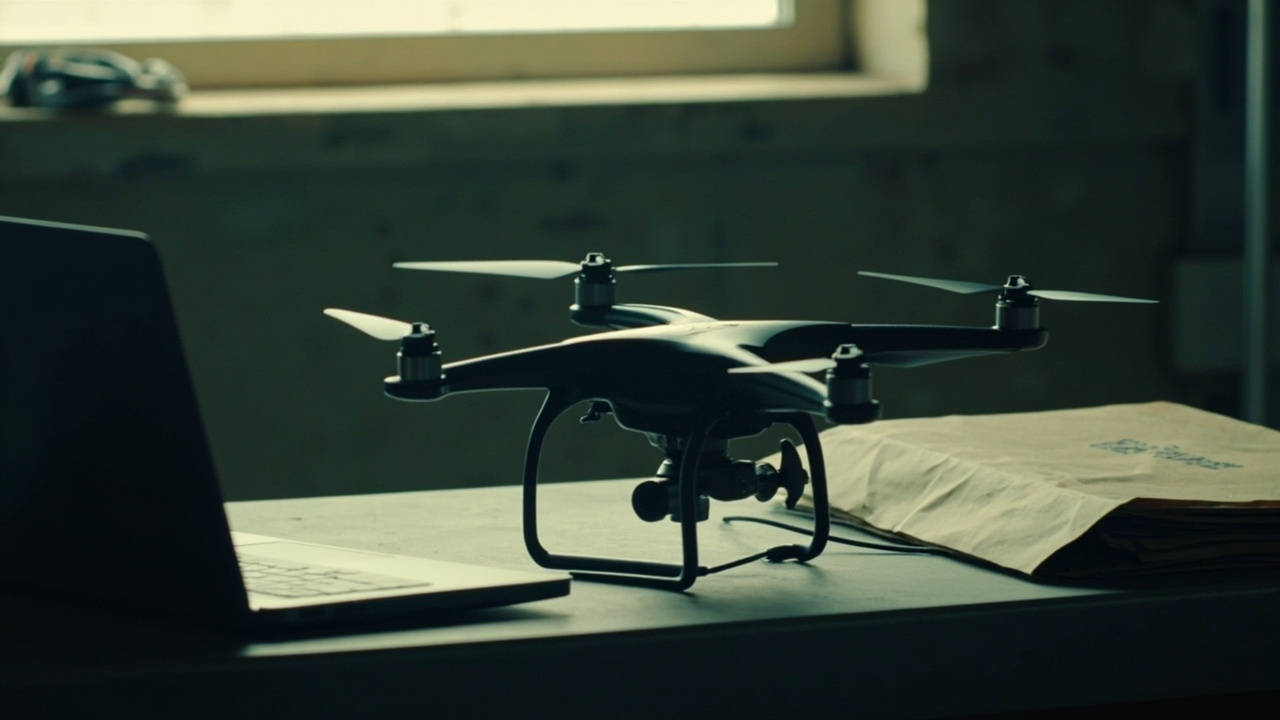
A hard landing, a client who says the aircraft left the polygon, a claim that you flew over people. The useful file is rarely the pretty replay in the app. It is the raw record still on the aircraft, the controller, or a card nobody has touched. Drone flight log legal evidence preservation is a sequence, not a folder name. On several popular airframes, powering the aircraft on creates a new flight log, and a full onboard store makes room by deleting an older one. The Scientific Working Group on Digital Evidence says so in SWGDE 21-F-002-1.2, version 1.2, dated 31 July 2025. The person who “just checks the log” can be the person who destroyed it. Part 107 does not hand a remote pilot a manned-style logbook duty. That silence is not a preservation plan. Two different clocks start when someone is hurt or when property other than the aircraft is damaged, and a civil case can demand the file even when no agency report is due. If the sortie was for a paying client, the commercial drone insurance file will ask for the same bytes the other side will.
Three stores, and only one of them is the app replay
DJI’s accident-export guide treats the phone or controller FlightRecord folder as the package support wants after a crash, and it treats aircraft flight-control data as a separate export through DJI Assistant 2. The paths are not interchangeable, and the aircraft path is the one that collides with preservation.
On Android, DJI Fly keeps the folder under dji.go.v5, then the files folder, then FlightRecord. DJI GO 4 uses DJI/dji.go.v4/FlightRecord. On iOS the same folder sits behind Files, or behind a Finder copy when the phone is cabled to a Mac. The guide’s aircraft steps are explicit: connect the aircraft, power it on, open the Assistant 2 build that matches the model, and use Log Export. That is a write-capable session. It is not a read-only peek. The support page is here: DJI Fly and DJI GO 4 flight-record export.
SWGDE 21-F-002-1.2 lists what an examiner should expect across those stores: dates and times of operation, navigational waypoints, GPS positions, motor speeds, altitude, direction, flight route, launch location, landing location, and mission-specific payload or audit data. User-created imagery and the flight plan the pilot defined are a separate class of artifact. Removable SD or microSD cards, in the aircraft or in the camera, are a separate acquisition. So is the controller, the tablet, and any cloud account the app syncs to. A replay inside the app is a view. The TXT file on the phone and the DAT or flight-controller export from the aircraft are records. Work on a copy of each.
Drone flight log legal evidence preservation on the bench
Do this before anyone opens the app “to see what happened.” Photograph the aircraft, the controller, and the cards as found. Note power state, whether a card is seated, and the serial numbers you can read without powering anything on. SWGDE 18-F-002-2.0, Best Practices for Digital Evidence Collection, version 2.0 dated 20 November 2025, expects a chain of custody and contemporaneous notes. Those notes should include the software used, file names, downloaded size, and hash values.
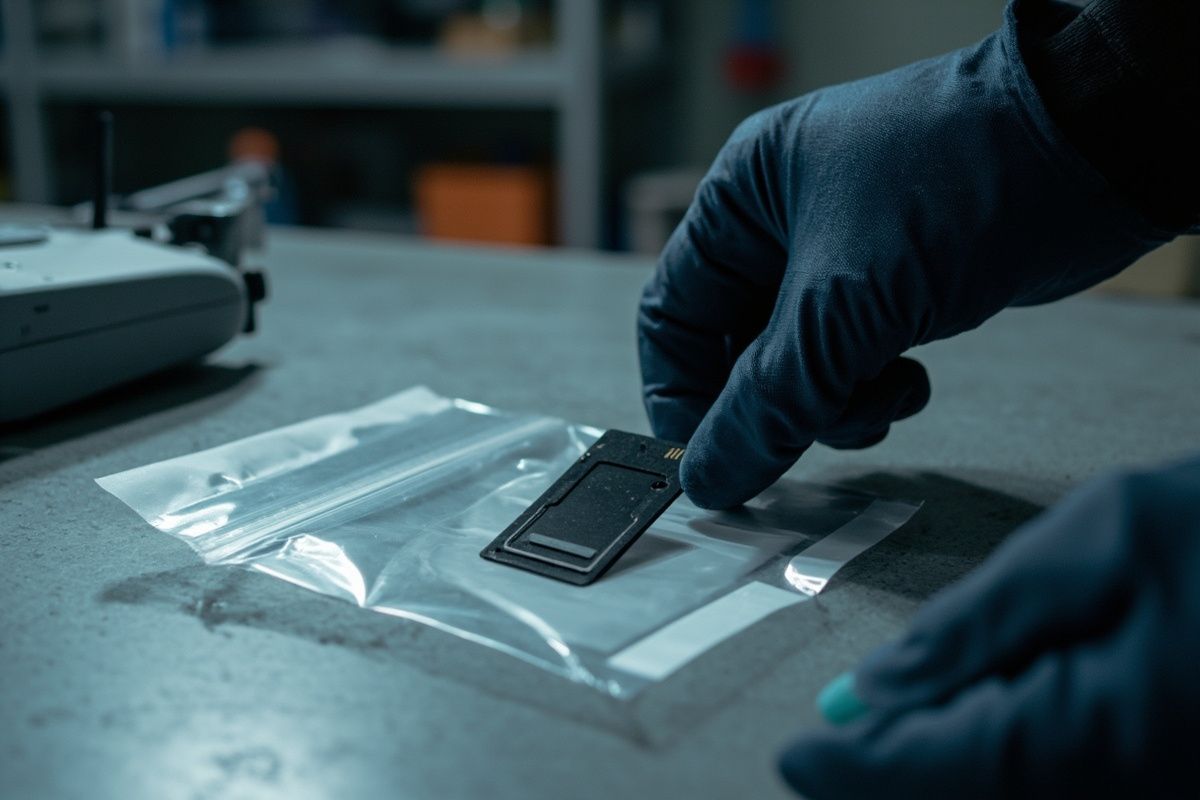
Pull removable media first. Copy the card to a drive you control. Hash the source and the copy, then open only the copy. The NIST CFReDS drone data set is the public model. VTO Labs, funded by the DHS Science and Technology Directorate, purchased 79 drones across 30 models, flew them inside a controlled geofence, and acquired the aircraft, controller, phone, and computer. Each data sheet records the flight’s GPS bounds, the day flown, and the file name, size, and hash of every acquisition. A Tuesday inspection is not a chip-off, and it is not a reformat so the client can have the photos before lunch.
Isolate the controller and the phone from the network if you can. A sync that cleans up old flights is a write. If you still need aircraft data, power the aircraft once, on the bench, after the card is copied, and export the window you need. SWGDE’s warning is specific: on some popular models, power-on creates a new flight log, and a full or near-full store deletes older logs to make room. The same document says GPS waypoints logged at startup can be wrong if the receiver was not calibrated. Check the track against the recovery location, the photo timestamps, and any other device on that flight.
Part 107 never required the logbook you think it did
Read the rule, not the forum summary. 14 CFR 107.7 requires the remote pilot in command, the owner, or the person manipulating the controls to present the remote pilot certificate on request from the Administrator, the NTSB, a law enforcement officer, or the TSA, and to make available any document, record, or report required to be kept under the regulations of this chapter. The production duty attaches to records the chapter already requires. It does not, by itself, create a flight-logbook rule for a standard Part 107 operation.
The retention section that does exist, 14 CFR 107.165, sits in Subpart D. It binds the person who submits a declaration of compliance for Category 2 or Category 3 operations over people. That person must keep the supporting information used to show the aircraft meets 107.120(a) or 107.130(a). A producer keeps it for two years after production of that aircraft ceases. A designer or modifier keeps it for two years after the declaration was submitted. That is a manufacturer or modifier file. It is not your mapping sortie.
14 CFR 107.5 is the falsification rule. No person may make or cause a fraudulent or intentionally false record or report that is required to be made, kept, or used to show compliance with Part 107. If a waiver, a means of compliance, or a safety report makes a record required, editing it after the fact is a compliance problem, not a paperwork preference.
Waiver special provisions can add the documentation Part 107 omits. A 107.29 night waiver and a BVLOS waiver both turn on what the responsible person can produce when the FAA asks how training was documented. A standard daylight job with no waiver still has no logbook order in the regulation. The case, the insurer, and the client contract might. See the Part 107 guide for the baseline.
Two clocks, and they are not the same statute
The FAA clock is 14 CFR 107.9. No later than 10 calendar days after an operation that meets either trigger, the remote pilot in command reports to the FAA, in a manner acceptable to the Administrator. Trigger one is serious injury to any person or any loss of consciousness. Trigger two is damage to any property other than the small unmanned aircraft, unless the cost of repair, including materials and labor, does not exceed $500, or the fair market value does not exceed $500 in the event of total loss. Damage to the aircraft itself does not start this clock. A $400 cracked windshield on a truck does not. A $600 skylight does.
The NTSB clock is a different definition. 49 CFR 830.2, as amended 14 July 2022 at 87 FR 42104, defines an unmanned aircraft accident as an occurrence associated with the operation of any public or civil unmanned aircraft system, from the moment the system is activated with the purpose of flight until it is deactivated at the end of the mission, in which either any person suffers death or serious injury, or the aircraft holds an airworthiness certificate and sustains substantial damage. A typical Part 107 aircraft does not hold an airworthiness certificate. Substantial damage alone, a broken arm, a flooded core, is not an unmanned aircraft accident under that definition. Death or serious injury still is, certificate or not.
Serious injury, for that NTSB definition, means hospitalization for more than 48 hours commencing within 7 days, a fracture other than a simple fracture of fingers, toes, or nose, severe hemorrhage or nerve, muscle, or tendon damage, injury to an internal organ, or second- or third-degree burns, or any burns affecting more than 5 percent of the body surface. Section 107.9 uses the words “serious injury” and “loss of consciousness” and does not paste the 830.2 definition into the section. Do not assume the thresholds match. Report against the statute you are actually under.
49 CFR 830.5 requires the operator of a civil aircraft to notify the nearest NTSB office immediately, by the most expeditious means available, when an accident or a listed serious incident occurs. The NTSB’s 1 August 2022 advisory to operators of civil uncrewed aircraft says FAA notification procedures are not a substitute for that duty, and it places hobby and recreational flying outside the advisory’s scope. Read the incident list in 830.5 before you decide a bent prop is “just an FAA thing.”
If notification is required, 49 CFR 830.10(a) makes the operator responsible for preserving, to the extent possible, wreckage, cargo, mail, and all records, including all recording mediums of flight, maintenance, and voice recorders, pertaining to the operation and maintenance of the aircraft and to the airmen, until the Board takes custody or a release is granted under 831.12(b). Paragraph (d) is broader than the wreckage hold: retain all records, reports, internal documents, and memoranda dealing with the accident or incident until the Board authorizes otherwise. Before the Board takes custody, wreckage, mail, or cargo may be moved only to remove injured or trapped persons, to protect the wreckage from further damage, or to protect the public. If you move it, sketches, notes, and photographs of the original position are required where possible.
There is no general federal retention period for an ordinary Part 107 log that never becomes a required record. Do not invent one. For a non-reportable flight, the hold is whatever the insurance policy, the client contract, and the limitations period in the state where you operate actually say. A cloud account you do not control is not that archive.
Authentication is a foundation, not a sticker
Federal Rule of Evidence 901(a) requires evidence sufficient to support a finding that the item is what the proponent claims it is. That is a low bar, and it is still a bar. Rule 901(b)(9) is the process-or-system example: describe the process and show that it produces an accurate result. Rule 901(b)(4) is distinctive characteristics, the internal pattern of a file that matches the aircraft, the time, and the other devices on the flight.
Rules 902(13) and 902(14), effective 1 December 2017, let a qualified person certify that foundation instead of sitting in the witness chair for the authentication step. Rule 902(13) covers a record generated by an electronic process or system that produces an accurate result. A flight log written by the aircraft or the app is in that family. Rule 902(14) covers data copied from a device, storage medium, or file, authenticated by a process of digital identification. That is the hash. The Federal Judicial Center note on the amendments is blunt about the limit: the certification establishes authenticity only. Hearsay, relevance, and in a criminal case the right to confrontation stay open.
Rule 803(6) is the hearsay exception people reach for next. The record must be made at or near the time by, or from information transmitted by, someone with knowledge. It must be kept in a regularly conducted activity, and making it must be a regular practice of that activity. A custodian or other qualified witness testifies to those points, or a 902(11) or 902(12) certification does. The opponent can still show the source or the method lacks trustworthiness. A log the aircraft writes on every flight, before anyone knows there will be a lawsuit, fits that pattern better than a narrative typed after the client called.
Notice is part of the rule. Rules 902(13) and 902(14) borrow the 902(11) notice requirements: before the hearing, reasonable written notice, and the record plus the certification available for inspection. A hash affidavit sprung the morning of trial is how a clean copy gets kept out. State courts are not bound by the Federal Rules.
Remote ID is not the archive
Broadcast Remote ID is a transmission. It is not a flight-log file you can hash after the fact, and it is not a substitute for the card in the aircraft. The enforcement picture is in the Remote ID 2026 enforcement piece. If a network provider retained a track, that retention is the provider’s policy, not a Part 107 right you can assume. Ask, in writing, before you need the file. Do not cite a retention period you have not read in that provider’s terms.
Maintenance records are a different file again. A motor that was due for replacement, a battery cycle count, a prop installed that morning: those facts live in the maintenance log, and they are not always in the flight record. The maintenance failure piece is the companion when the dispute is “the aircraft was unairworthy,” not “the track left the geofence.” Aggregated reliability data, including the 5.4 million flight set, tells you which components fail in the fleet. It does not authenticate your sortie.
The eight steps, in order
- Stop. Do not power the aircraft to “see the log.”
- Photograph the as-found state, including card seats, controller, and phone. Write the time and who is present.
- Remove SD and microSD cards. Copy them to a drive you control. Hash the source and the copy. Work on the copy.
- Export the FlightRecord folder from the phone, tablet, or smart controller by cable, without opening a sync that can rewrite it. Zip the folder. Hash the zip.
- If you still need aircraft flight-controller data, power the aircraft once on the bench and export through the Assistant 2 build that matches the model. Save the raw export. Do not rename files inside the original folder.
- Write a one-page custody note: who copied, what tool, file names, sizes, hashes, and where the originals went.
- If 107.9 or 830.5 is in play, make the NTSB notification immediately and calendar the FAA report inside 10 days. Preserve under 830.10 until release.
- Send the insurer and the lawyer the hashes and the custody note, not a screenshot of the app.
Bottom line
Put those eight steps in the pre-accident section of the ops manual this week, not after the next hard landing. If you fly under a waiver, read the special provisions before you treat Part 107’s silence as permission to delete. The file that holds up is the one you copied before anyone had a reason to edit it. Start with the card. Power on last.
FAQ
Does Part 107 require a drone flight log?
No general logbook duty appears in Part 107 for a standard remote pilot. Section 107.7 requires production of records the chapter already requires you to keep. Section 107.165 is a two-year hold for the person who files a declaration of compliance, not for Tuesday’s mapping sortie. A waiver’s special provisions can add a documentation duty the base rule omits.
What if I already powered the drone on?
Stop cycling power. Copy whatever FlightRecord files and cards still exist, hash them, and write the power-on into the custody note, including the time. SWGDE’s overwrite warning is about a full or near-full store, not a guarantee that every power-on deleted the flight you need. Do not test that theory by turning the aircraft on again.
Is a DJI TXT file enough for court?
It can be the item you authenticate under Rule 901 and, with a qualified certification and advance notice, under Rule 902(13) or 902(14). Authentication does not skip hearsay. Aircraft flight-controller exports and the photos on the card are separate items. A screenshot of the app replay is the weakest of the three.
How long do I keep logs if nobody was hurt?
Part 107 sets no general period. Section 830.10’s hold, until the Board authorizes otherwise, applies when notification was required. Otherwise match the insurance policy, the client contract, and the limitations period where you operate. A cloud account you do not control is not the archive.
Does a broken arm trigger the NTSB?
Not by itself, under the current 830.2 definition of an unmanned aircraft accident, unless the aircraft holds an airworthiness certificate and the damage is substantial, or someone suffered death or serious injury. The FAA clock in 107.9 is a different test. It can still run on serious injury, loss of consciousness, or damage to other people’s property above $500.