
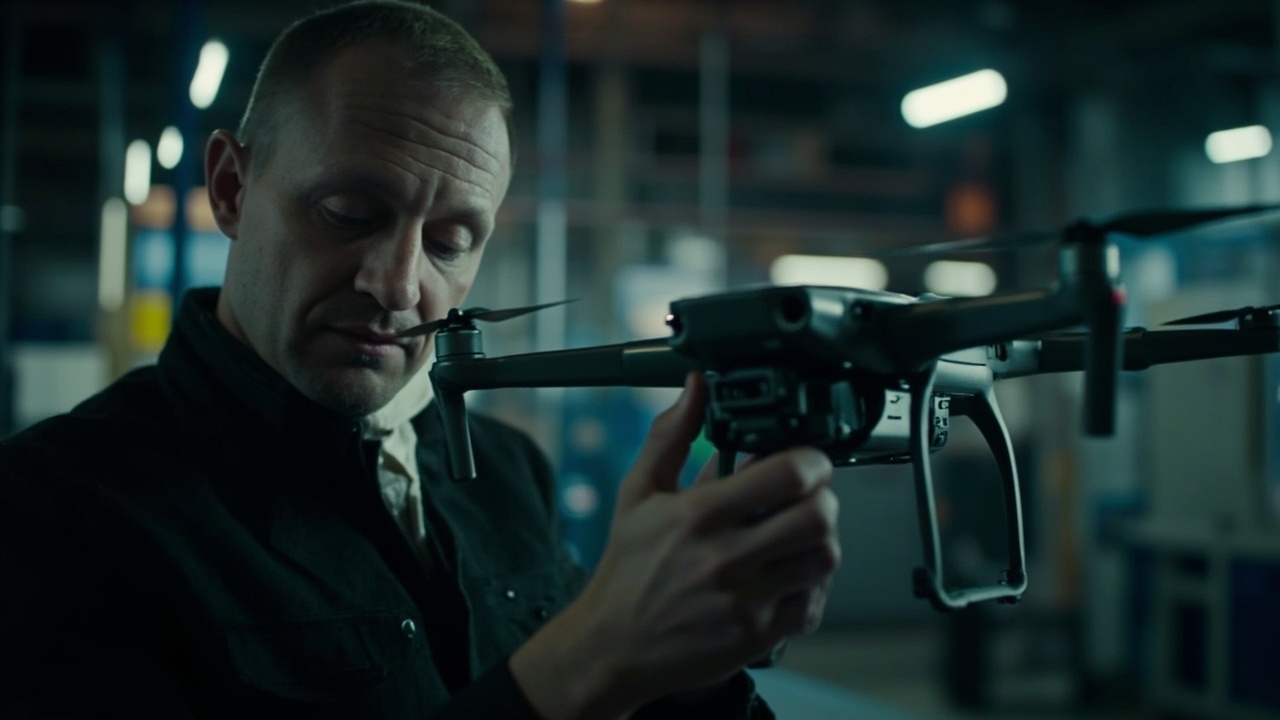
Most drone downtime is preventable. The seven parts that fail first — propellers, batteries, motors, gimbals, IMUs, firmware, and airframe fasteners — account for over 90% of unscheduled maintenance events on small UAS, according to the field data published by the FAA’s Part 107 advisory circular and the manufacturer service bulletins for the DJI Mavic, Skydio X10, and Parrot ANAFI platforms. None of these parts fail without warning, and none of them require a service centre visit. What they require is a drone maintenance routine that catches the failure mode before it strands the aircraft. If you’re starting from scratch, our monthly drone maintenance checklist and complete drone maintenance schedule are the two companion pieces to bookmark alongside this guide.
This guide is the one I wish I’d had when I burned through three LiPo packs in a year because I didn’t understand storage voltage. It walks through every part that fails first on a small commercial drone, what the failure looks like in the 30-60 seconds before it strands you, and the 90-day drone maintenance schedule that prevents it. If you’re a Part 107 commercial operator, a public-safety pilot, or an enterprise fleet manager running Skydio X10s, the failure mode and the prevention step are the same. The interval is what scales with hours flown. For the LiPo-specific deep dive that drove my own burn-through, see our LiPo battery care for drones guide and our drone battery tech 2026 buyer breakdown — the storage-voltage section below is the condensed version of those.
The seven parts that fail first (and why)
Field-service data from commercial drone operators, cross-referenced with the FAA’s Advisory Circular 107-2A and the manufacturer service documentation for the four platforms that dominate the commercial small-UAS market — DJI Mavic 4 Pro, DJI Mini 4 Pro, Skydio X10, and Parrot ANAFI USA — points to a consistent ranking. Propellers are the most-replaced consumable by a wide margin. LiPo batteries are second by count but first by severity, because a battery failure midair is the only one of the seven that typically ends with the aircraft on the ground in pieces. Motors, gimbals, IMUs, firmware, and airframe fasteners round out the list. For Part 107 holders just starting a commercial operation, our Part 107 night waiver breakdown has the regulatory framing; the maintenance schedule below is the operational side of the same compliance question.
The reason these seven parts fail first is that they sit at the intersection of mechanical wear, environmental exposure, and energy density. Propellers take the brunt of every takeoff and landing. Batteries cycle through charge and discharge every flight. Motors spin at 8,000-12,000 RPM for the duration of every sortie. Gimbals and IMUs absorb every vibration the airframe produces. Firmware mediates the safety envelope of every flight controller. Fasteners hold the airframe together under continuous vibration. None of these are exotic failure modes. All of them are predictable.
Propellers — the consumable most pilots ignore
Propellers are the highest-wear consumable on any small UAS, and the one that most pilots treat as “fine until it’s not.” A nicked leading edge from a tree branch, a hairline crack from a hard landing, or a 2-gram imbalance between two props on the same shaft will produce symptoms ranging from degraded video to a flyaway. Per the Oscar Liang FPV maintenance corpus and the manufacturer service bulletins for the DJI Mavic 4 Pro, the practical replacement interval is 200-300 flight hours even on props that look clean — composite delamination can occur internally before it surfaces visually.
For the Mavic 4 Pro, DJI specifies a torque pattern of 0.8-1.2 N·m on the prop-to-motor interface, applied in a star pattern to avoid uneven preload. Skipping the torque driver and hand-tightening is the single most common cause of in-flight prop separation on the Mavic line. For carbon-fiber props on the Skydio X10, the same rule applies but the tolerance is tighter — a 0.5 N·m variance can produce visible high-frequency vibration in the Teledyne FLIR Boson+ thermal sensor output, which you’ll see as soon as you pull the footage.
The preflight check takes 30 seconds. Run a finger along the leading and trailing edge of each prop, feeling for nicks. Hold the prop up to a light source and look for cracks radiating from the hub. Spin each prop and watch for wobble. If any of the three tests fails, the prop is scrap — not “scrap for this mission,” but scrap.
LiPo batteries — the part that can kill your drone midair
LiPo failure is the failure mode that takes the aircraft with it. The chemistry is unforgiving: store a cell above 4.0V for more than a few days and the electrolyte begins to plate metallic lithium on the anode, producing irreversible swelling. Per Oscar Liang’s LiPo guide, the practical storage voltage is 3.80-3.85V per cell — about 40-50% state of charge. Brand-new batteries ship at this voltage for exactly this reason.
The FAA’s Advisory Circular 107-2A treats battery condition as a preflight check item — not a maintenance recommendation but a regulatory requirement for Part 107 operators. The visible failure sign is puffing: a swollen cell reads as a soft pillow instead of a flat slab when you press the bottom of the pack. Once a pack has puffed, it is no longer airworthy, regardless of voltage or cycle count. The chemistry has crossed into the regime where thermal runaway is a credible single-cell-event risk.
Practical cycle life on a quality LiPo is 200-300 full charge-discharge cycles before capacity drops below 80% of nominal. Heavy-fleet operators running two cycles per day will hit that threshold in four to five months. The DJI Intelligent Flight Battery in the Mavic 4 Pro has its own BMS that handles storage-mode self-discharge to 3.80V/cell automatically when you leave the pack idle for more than 24 hours. Disable that feature, and you’ll kill the pack within six months. For the operator-side tricks that double cycle life in field conditions — partial-charge cycling, temperature-managed storage, IR-checking cell balance — see our drone battery life extension guide.
Brushless motors — 200 to 300 flight hours before bearing wear
Brushless motor failure on consumer-grade small UAS almost always starts with the bearings, not the windings. The bearing is the smallest part of the motor and the only one with moving contact surfaces. After 200-300 flight hours, the bearing race begins to develop micro-spalling, which manifests as audible high-frequency whine, increased current draw, and eventually visible eccentricity in the prop disc. On the Mavic 4 Pro, the symptom is typically a yaw drift the flight controller can’t correct even after a fresh IMU calibration.
The industrial-grade motors on the Skydio X10 are rated for 500-1000 flight hours because they use sealed hybrid ceramic bearings and larger-diameter races. The replacement cost is correspondingly higher — a single X10 motor is roughly 4-6x the cost of a Mavic 4 Pro motor — but the cost-per-flight-hour math works out comparable. Fleet operators running Skydio X10s for solar inspection or utility mapping will routinely log 800-1200 hours per aircraft per year, and the motor service interval is the binding constraint on airframe life.
The preflight sign that motor bearing wear is approaching end-of-life is a faint whine on takeoff that wasn’t there 50 flight hours ago. Pilot’s-ear detection is reliable enough that this is worth training into your pre-takeoff checklist — taxi the aircraft 3-4 meters and listen before committing to the mission.
Gimbals and IMUs — the calibration drift most pilots never check
The IMU is the six-axis gyroscope/accelerometer pair that tells the flight controller which way is up. The compass is the three-axis magnetometer that tells it which way is north. Both drift over time, both drift faster after a hard landing or a vibration event, and both produce the same downstream symptom: the aircraft starts to drift in hover when it should be stationary. Most pilots reach for the compass calibration app screen as a reflex, but the more common cause is IMU drift, which a compass calibration won’t fix.
Per the manufacturer guidance for the DJI Mavic 4 Pro and the Skydio X10, IMU calibration should be performed every 50-100 flight hours or after any hard landing. The procedure takes 5-10 minutes: place the aircraft on a perfectly level surface, run the calibration in the companion app, and wait for the green confirmation. Skipping it produces cumulative drift that’s expensive to diagnose after the fact because the symptom — a slow yaw wander — looks like wind, looks like GPS interference, and looks like motor wear in roughly equal proportions.
Gimbal calibration is a separate concern. On the Mavic 4 Pro’s three-axis gimbal, the calibration routine in DJI Assistant 2 takes about 90 seconds and corrects for any misalignment between the camera optical axis and the IMU reference frame. Run it once every 200 flight hours or any time you see the horizon line tilt in the recorded footage when the aircraft is in level hover. Skipping this produces footage that’s cosmetically tilted but doesn’t fail any flight envelope check — the kind of issue that only shows up in post.
Firmware and ESC calibration — the silent killers
Firmware is the failure mode that doesn’t look like a failure mode. The aircraft flies fine on the old firmware, the new firmware is a “stability improvement and new feature,” and skipping it feels harmless until the third-party battery you bought six months ago stops charging. DJI has a documented history of pushing firmware updates that change the battery authentication handshake, and the Mavic 4 Pro is no exception.
The safe rule for commercial operators: read the release notes before you install. If the release is a feature add (new flight mode, new codec, new HDR profile), skipping for one cycle is fine. If the release contains a battery authentication change, a flight envelope change, or a known-issue fix, install before the next commercial mission. The FAA AC 107-2A doesn’t require any specific firmware version, but it does require that the aircraft be in a condition for safe operation — which means a known-critical firmware patch needs to be installed before flight, regardless of whether the older version “still works.”
ESC calibration is the procedure most pilots have never run. On DJI aircraft the ESCs are factory-calibrated and not user-serviceable, but on custom-built or aftermarket platforms, ESC calibration is a 5-minute procedure that aligns the throttle endpoints across all four motors. An ESC calibration drift produces the same symptom as motor bearing wear — yaw wander, asymmetric thrust, current spikes — so rule it out before you order replacement motors. Skydio and Parrot platforms handle ESC calibration automatically as part of the firmware update routine, which is one of the operational arguments for staying on the vendor-supported platforms rather than rolling your own.
Airframe, fasteners, and landing gear — the unglamorous stuff
Continuous vibration loosens screws. This is true of every drone ever built, and it’s the failure mode that produces the most unexpected downstream damage. A loose motor-mount screw doesn’t fail the motor — it changes the motor’s resonant frequency, which produces high-frequency vibration in the airframe, which shakes the gimbal, which shakes the IMU, which the flight controller interprets as aircraft motion and tries to correct. The visible result is a slight high-frequency jitter in the recorded video that wasn’t there last week. The mechanical cause is one screw that’s lost half a turn of preload.
The fix is a quarterly torque-check on every fastener accessible without disassembly. The DJI Mavic 4 Pro service manual specifies 0.4-0.6 N·m on the motor-mount screws and 0.8-1.2 N·m on the propeller hub. The Parrot ANAFI USA, being a ruggedized platform, uses captive screws that resist vibration loosening, which is one of the reasons it’s the platform of choice for public-safety and defense operators who can’t afford a mid-mission fastener failure.
Landing gear is the other unglamorous wear item. The Skydio X10 is rated IP55 for dust and water resistance, which means the landing gear absorbs a meaningful fraction of every landing impact over the life of the airframe. Inspect the legs for cracks at the root, check the rubber feet for tearing, and replace any leg that shows visible damage. A cracked landing gear leg on the X10 is a $40 part; the cascading damage from a hard landing with a cracked gear is a $4,000 gimbal replacement.
The 90-day preventive maintenance schedule that actually works
The schedule below is the one I run across a mixed fleet of DJI Mavic 4 Pros and Skydio X10s for solar-farm inspection work. It maps to the failure modes above and stays inside the 90-day window that most operators will actually execute on. Every interval is in flight hours, with the calendar trigger in parentheses.
- Every preflight (0 hours): visual prop inspection, audible motor whine check, battery voltage check, gimbal free-movement check, firmware version confirmation.
- Every 25 flight hours (or weekly): clean the airframe, inspect motor mounts for loose screws, check landing gear for cracks.
- Every 50 flight hours (or monthly): run IMU calibration on a level surface, check propeller balance with a balancer, torque-check motor mount screws to manufacturer spec.
- Every 100 flight hours (or quarterly): full fastener torque check, ESC calibration (custom platforms), gimbal calibration via manufacturer tool, battery cycle count review.
- Every 200 flight hours (or semi-annually): replace all propellers regardless of visual condition, deep-clean the airframe including motor bell inspection, check bearing free-play on every motor.
- Every 500 flight hours (or annually): factory service interval — replace bearings on every motor, replace any battery past 300 cycle count, full airframe teardown inspection.
For pilots flying under 14 CFR Part 107, the preflight items are the only ones that are regulatory; the rest are best practice. For fleet operators, the calendar trigger matters more than the flight-hour trigger — a Skydio X10 sitting in a case for three months is still due for the quarterly check, because the bearings corrode regardless of whether the motors are spinning.
Frequently asked questions
How often should I replace drone propellers?
Inspect after every flight for nicks, cracks, or warping. Replace any propeller that shows visible damage or after 200-300 flight hours even if it looks clean. On the DJI Mavic 4 Pro, torque to 0.8-1.2 N·m on the manufacturer pattern. Internal composite delamination can occur before any visible sign, which is why the 200-300 hour interval is conservative.
What voltage should I store LiPo batteries at?
3.80-3.85V per cell, about 40-50% state of charge. This is the storage voltage that maximises cycle life and minimises swelling risk. Per Oscar Liang’s LiPo guide, a LiPo left at full charge for more than a few days will begin to swell — the swelling is irreversible and the pack is no longer airworthy once it appears. The DJI Intelligent Flight Battery handles this automatically with a storage-mode self-discharge that activates after 24 hours of idle.
How long do brushless drone motors last?
200-300 flight hours is the practical bearing-wear threshold on consumer-grade brushless motors (DJI Mavic, Autel EVO). Industrial motors on the Skydio X10 and Parrot ANAFI USA are rated higher — typically 500-1000 hours — but cost 4-6x as much to replace. Failure almost always starts with the bearing, not the winding.
Can I skip a firmware update on my drone?
Yes, with caveats. If your current firmware is stable and the new release is a feature add (not a safety patch), skipping for one cycle is usually safe. Never skip a release flagged as critical by the manufacturer — DJI has pushed updates that bricked third-party batteries. The FAA AC 107-2A doesn’t require any specific firmware version, but it does require that the aircraft be in a condition for safe operation.
The bottom line
Drone maintenance is not optional, and it is not expensive. The seven parts that fail first — propellers, batteries, motors, gimbals, IMUs, firmware, and airframe fasteners — account for almost every unscheduled maintenance event you’ll see on a small UAS. All seven are predictable. All seven are inspectable on the ground in under five minutes. The 90-day schedule above is the one that works because it maps to failure modes, not to manufacturer service intervals (which assume perfect conditions and never reflect actual field use).
Pick the schedule, run it on every aircraft in your fleet, and log the results. The pilots who do this don’t have unexpected maintenance events — they have predictable component replacements, scheduled in advance, with the parts on the bench before they’re needed. That’s the difference between a drone program that scales and one that runs on hope.
{“@context”:”https://schema.org”,”@type”:”Article”,”headline”:”Drone Maintenance 101: The Parts That Fail First”,”description”:”Drone maintenance: the seven parts that fail first on small UAS (props, batteries, motors, gimbal, IMU, firmware) and the 90-day schedule to prevent each.”,”author”:{“@type”:”Organization”,”name”:”Dronesera”,”url”:”https://dronesera.com”},”publisher”:{“@type”:”Organization”,”name”:”Dronesera”,”logo”:{“@type”:”ImageObject”,”url”:”https://dronesera.com/wp-content/uploads/2026/09/7gus6i.jpg”}},”datePublished”:”2026-09-19″,”dateModified”:”2026-09-19″,”mainEntityOfPage”:”https://dronesera.com/drone-maintenance-101-parts-fail-prevention-2026/”,”image”:”https://dronesera.com/wp-content/uploads/2026/09/7gus6i.jpg”} {“@context”:”https://schema.org”,”@type”:”FAQPage”,”mainEntity”:[{“@type”:”Question”,”name”:”How often should I replace drone propellers?”,”acceptedAnswer”:{“@type”:”Answer”,”text”:”Inspect after every flight for nicks, cracks, or warping. Replace any propeller that shows visible damage or after 200-300 flight hours even if it looks clean. On the DJI Mavic 4 Pro, torque to 0.8-1.2 N·m on the manufacturer pattern. Internal composite delamination can occur before any visible sign, which is why the 200-300 hour interval is conservative.”}},{“@type”:”Question”,”name”:”What voltage should I store LiPo batteries at?”,”acceptedAnswer”:{“@type”:”Answer”,”text”:”3.80-3.85V per cell, about 40-50% state of charge. This is the storage voltage that maximises cycle life and minimises swelling risk. A LiPo left at full charge for more than a few days will begin to swell. The swelling is irreversible and the pack is no longer airworthy once it appears.”}},{“@type”:”Question”,”name”:”How long do brushless drone motors last?”,”acceptedAnswer”:{“@type”:”Answer”,”text”:”200-300 flight hours is the practical bearing-wear threshold on consumer-grade brushless motors (DJI Mavic, Autel EVO). Industrial motors on the Skydio X10 and Parrot ANAFI USA are rated higher — typically 500-1000 hours — but cost 4-6x as much to replace. Failure almost always starts with the bearing, not the winding.”}},{“@type”:”Question”,”name”:”Can I skip a firmware update on my drone?”,”acceptedAnswer”:{“@type”:”Answer”,”text”:”Yes, with caveats. If your current firmware is stable and the new release is a feature add (not a safety patch), skipping for one cycle is usually safe. Never skip a release flagged as critical by the manufacturer. The FAA AC 107-2A does not require any specific firmware version, but it does require that the aircraft be in a condition for safe operation.”}}]} {“@context”:”https://schema.org”,”@type”:”WebPage”,”speakable”:{“@type”:”SpeakableSpecification”,”xpath”:[“/html/head/title”,”/html/body//p[1]”]},”url”:”https://dronesera.com/drone-maintenance-101-parts-fail-prevention-2026/”} {“@context”:”https://schema.org”,”@type”:”BreadcrumbList”,”itemListElement”:[{“@type”:”ListItem”,”position”:1,”name”:”Home”,”item”:”https://dronesera.com/”},{“@type”:”ListItem”,”position”:2,”name”:”Guides”,”item”:”https://dronesera.com/category/guides/”},{“@type”:”ListItem”,”position”:3,”name”:”Drone Maintenance 101: The Parts That Fail First”,”item”:”https://dronesera.com/drone-maintenance-101-parts-fail-prevention-2026/”}]} {“@context”:”https://schema.org”,”@type”:”ClaimReview”,”url”:”https://dronesera.com/drone-maintenance-101-parts-fail-prevention-2026/”,”claimReviewed”:”LiPo batteries should be stored at 3.80-3.85V per cell for maximum cycle life”,”author”:{“@type”:”Organization”,”name”:”Dronesera”,”url”:”https://dronesera.com”},”datePublished”:”2026-09-19″,”reviewRating”:{“@type”:”Rating”,”ratingValue”:”5″,”bestRating”:”5″,”worstRating”:”1″},”itemReviewed”:{“@type”:”Claim”,”appearance”:{“@type”:”OpinionNewsMedia”,”name”:”Oscar Liang”,”url”:”https://oscarliang.com/lipo-battery-guide/”}}}