
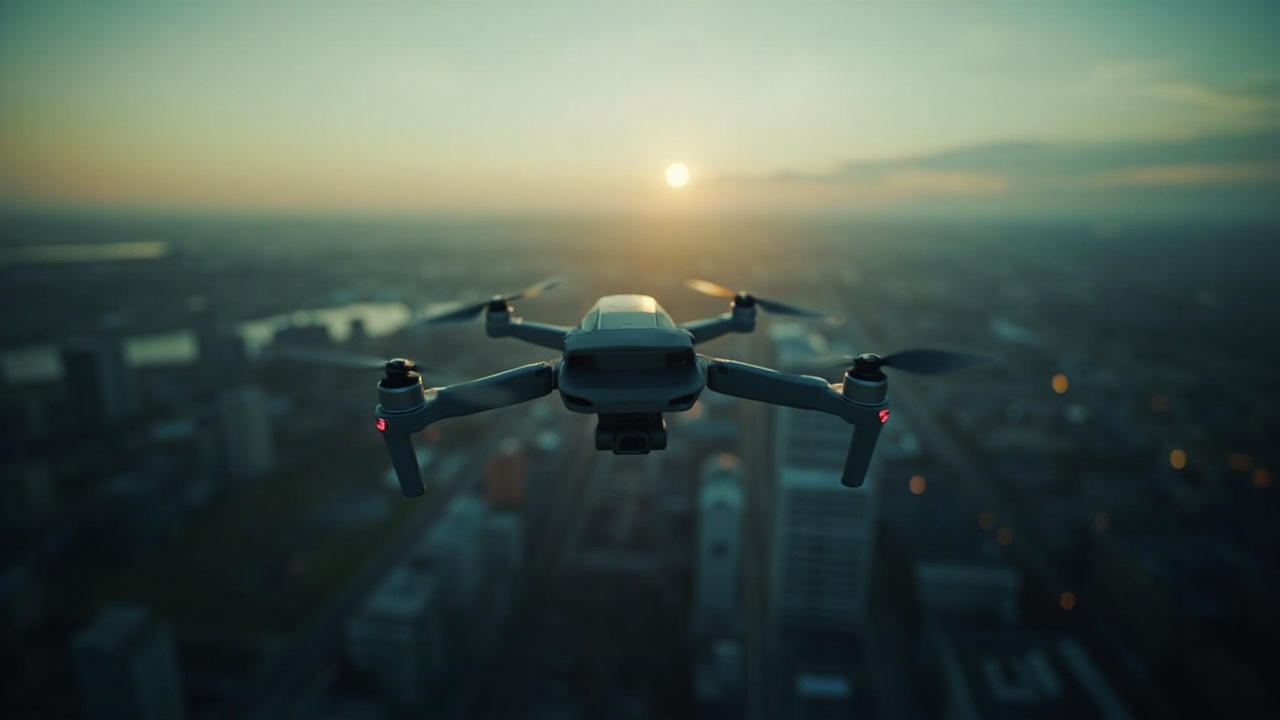
Ukraine’s Defense Ministry announced on April 21, 2026 that the country produced more than 4 million drones in 2025 and is targeting more than 7 million in 2026. The 2026 plan, reported by Aviation Week the same day, was the first hard number to put a floor under what had until then been vague talk of “industrial scaling.” Three weeks later, Ukraine’s Commander-in-Chief Oleksandr Syrsky warned via Telegram on May 8, 2026 that Russia plans to produce 7.3 million FPV drones and 7.8 million warheads for various UAV types in the same window. Both numbers are staggering. Both are credible. The unit economics that allow them are the most consequential defense-industrial story of the decade, and almost nobody outside the procurement offices has actually broken them down.
This is the breakdown. We will look at how Ukraine scaled from a handful of hobby quads in 2022 to a multi-million-unit industrial base by 2026, what each drone actually costs to build, where the components come from, how the Brave1 codification pipeline makes the numbers defensible, and where the economic model breaks next — including the export question and the Chinese supply-chain risk that every Western defense planner is now quietly worrying about.
From a handful of hobby quads to a wartime industrial base
The baseline matters. In February 2022, the Ukrainian military had a drone force that consisted almost entirely of off-the-shelf commercial quadcopters — DJI Mavics, a handful of Bayraktar TB2s supplied by Turkey, and whatever commercial FPV racing drones could be bought on AliExpress with a credit card. Total Ukrainian drone inventory at the start of the full-scale invasion was in the low thousands of airframes, the bulk of them consumer-grade.
ChinaTalk’s April 15, 2026 deep-dive, drawn from a conversation with Cat Buchatskiy of the Snake Island military analytical group and Chris Miller of the Fletcher School, lays out the scaling curve. By the end of 2022, Ukraine had shifted from imported consumer drones to domestically assembled FPV strike drones. By the end of 2023, the country had a fragmented but real industrial base of several hundred small manufacturers, each producing dozens to hundreds of airframes per month. By the end of 2024, those same manufacturers had consolidated, professionalized, and started hitting the kind of monthly volumes that allow 4-million-unit annual production runs. The 2026 target of 7 million units is not a stretch goal — it is the linear extrapolation of a curve that has been compounding for four years.
The baseline matters. In February 2022, the Ukrainian military had a drone force that consisted almost entirely of off-the-shelf commercial quadcopters — DJI Mavics, a handful of Bayraktar TB2s supplied by Turkey, and whatever commercial FPV racing drones could be bought on AliExpress with a credit card. Total Ukrainian drone inventory at the start of the full-scale invasion was in the low thousands of airframes, the bulk of them consumer-grade.
ChinaTalk’s April 15, 2026 deep-dive, drawn from a conversation with Cat Buchatskiy of the Snake Island military analytical group and Chris Miller of the Fletcher School, lays out the scaling curve. By the end of 2022, Ukraine had shifted from imported consumer drones to domestically assembled FPV strike drones. By the end of 2023, the country had a fragmented but real industrial base of several hundred small manufacturers, each producing dozens to hundreds of airframes per month. By the end of 2024, those same manufacturers had consolidated, professionalized, and started hitting the kind of monthly volumes that allow 4-million-unit annual production runs. The 2026 target of 7 million units is not a stretch goal — it is the linear extrapolation of a curve that has been compounding for four years.
What made the curve possible was not heroic engineering. It was modular design, frontline reassembly, and tight feedback loops between operators and manufacturers. Ukrainian FPV drones are deliberately built from a small number of standardized subsystems — flight controller, ESC stack, video transmitter, motor, frame — that can be mixed and matched across manufacturers. When a frontline unit reports that the current video transmitter is being jammed, the manufacturer can swap that one subsystem without re-engineering the whole airframe. This is consumer-electronics supply-chain thinking applied to defense, and it is the single most important reason Ukraine can ship 7 million units per year and the United States cannot.
What 7 million drones actually looks like in 2026
The 7-million-unit figure is the sum of three distinct production categories, and the breakdown matters because the unit economics are wildly different in each.
The 7-million-unit figure is the sum of three distinct production categories, and the breakdown matters because the unit economics are wildly different in each.
The largest category by volume is the FPV strike drone — the small, fast, expendable quadcopter with a shaped-charge warhead that has become the signature weapon of the war. These are produced in the hundreds of thousands per month by a network of roughly 200 domestic manufacturers. They are the cheapest airframes in the Ukrainian inventory, with per-unit costs running in the $400 to $500 range at 2026 component prices.
The second category is the reconnaissance UAV, which spans everything from small commercial-grade quadcopters used for artillery spotting to medium-endurance fixed-wing systems that can stay airborne for hours. Volumes are lower than FPV strike drones but the per-unit cost is much higher — anywhere from $5,000 for a hand-launched fixed-wing spotter to $50,000 or more for a tactical ISR platform with a stabilized EO/IR gimbal.
The third category is the interceptor drone — purpose-built systems designed to hunt and destroy incoming Russian reconnaissance and strike drones. Ukraine’s flagship interceptor, SkyFall’s P1-SUN, has been credited with downing more than 3,000 Shahed-type UAVs in 2026 according to a May 2026 Militarnyi report. Interceptors are produced in much smaller volumes but at much higher per-unit cost, with the P1-SUN running in the $1,500 range when produced at scale.
Add the three categories together and the 7-million-unit target becomes plausible, but only because the FPV strike drone volume is doing the heavy lifting. If you strip out FPV strike drones, Ukraine’s 2026 production of reconnaissance and interceptor UAVs is in the low hundreds of thousands — still a remarkable scale for a country at war, but a fundamentally different industrial story than the 7-million-unit headline.
Unit economics: the $400 FPV drone and the $1,500 interceptor
The per-unit cost of a Ukrainian FPV strike drone in 2026 is the number that should reset every Western defense procurement assumption still anchored to 2019-era cost curves. The ChinaTalk analysis and corroborating reporting from Ukraine’s domestic manufacturers put the bill of materials for a baseline FPV strike drone at roughly $350 to $400, with $50 to $100 of additional cost for assembly labor, the warhead, and final test. Total per-unit cost: $400 to $500.
The single largest line item is the flight controller and video transmitter combo, which together account for roughly 30 percent of the bill of materials. Motors account for another 20 percent. The airframe — typically a 3D-printed or injection-molded plastic shell with carbon-fiber arms — is a minor cost line. The warhead, usually a shaped-charge designed to penetrate light vehicle armor, is the second-largest line item at roughly 20 percent of total cost. Everything else — ESCs, antennas, batteries, ground stations — is rounding error in the bill of materials.
Compare this to the cost of a single Switchblade 300 loitering munition, which the United States has supplied to Ukraine in the low thousands of units at a per-unit procurement cost reportedly north of $50,000. A Ukrainian FPV strike drone does a fraction of what a Switchblade does — no datalink, no man-in-the-loop terminal guidance, no shaped charge optimized for armor — but it does it for 1 percent of the cost. At volume, the math is not subtle. Ukraine can lose 10 Ukrainian FPV strike drones to one Russian tank and still come out ahead on cost exchange ratio compared to a single ATACMS strike on that same tank.
The interceptor cost curve is steeper. The P1-SUN, per the SkyFall interview published February 10, 2026, sells for roughly $1,500 per unit at volume production, with the cost dominated by the terminal guidance module — a camera-and-machine-vision package that has to identify, track, and collide with a small maneuvering target at speed. The P1-SUN is roughly one-tenth the cost of a Shahed-136 on a unit basis, which is precisely why it makes economic sense to use a $1,500 drone to shoot down a $20,000 Shahed.
Component supply chain: where the parts come from
The hardest part of the Ukrainian drone production story is also the part that nobody in Kyiv wants to talk about publicly: the supply chain runs through China.
EURACTIV reported on April 23, 2026 that Ukrainian drone manufacturers publicly raised their dependence on Chinese components — motors, flight controllers, ESCs, cameras, and radio modules — as a strategic risk at the 2026 Brave1 defense tech summit. The dependence is not theoretical. The motors that go into a Ukrainian FPV strike drone are, in the majority of cases, Chinese-manufactured brushless outrunners sourced through European distribution intermediaries. The flight controllers are dominated by a handful of Chinese designs that have been reverse-engineered and re-branded by Ukrainian vendors. The video transmitters, which handle the operator-to-drone datalink, are almost universally Chinese-origin modules.
The hardest part of the Ukrainian drone production story is also the part that nobody in Kyiv wants to talk about publicly: the supply chain runs through China.
EURACTIV reported on April 23, 2026 that Ukrainian drone manufacturers publicly raised their dependence on Chinese components — motors, flight controllers, ESCs, cameras, and radio modules — as a strategic risk at the 2026 Brave1 defense tech summit. The dependence is not theoretical. The motors that go into a Ukrainian FPV strike drone are, in the majority of cases, Chinese-manufactured brushless outrunners sourced through European distribution intermediaries. The flight controllers are dominated by a handful of Chinese designs that have been reverse-engineered and re-branded by Ukrainian vendors. The video transmitters, which handle the operator-to-drone datalink, are almost universally Chinese-origin modules.
Ukraine has started building domestic alternatives to some of these components. Defender Media reported June 3, 2026 that Astravidya, a Ukrainian drone motor manufacturer, secured investment from the Czech S-Tech Ventures fund to launch a new production line capable of manufacturing 50,000 motors per month. That is meaningful volume — it is roughly one-third of what Ukrainian FPV production consumes monthly — but it is a single component in a bill of materials that includes ten or more other subsystems, almost all of which remain Chinese-dependent.
The strategic risk is two-fold. First, a Chinese export control decision could choke the Ukrainian production base overnight. Second, the same Chinese supply chain that feeds Ukraine also feeds Russia and feeds every other drone-producing country on earth, including the United States and Europe. The dependency is not Ukrainian-specific. It is the global defense-industrial baseline.
The Brave1 ecosystem and the codification pipeline
The institutional backbone that makes 7-million-unit production possible is Brave1, the Ukrainian Ministry of Defense codification and innovation platform launched in 2023. Brave1 is not a single procurement agency. It is a defense-tech accelerator, a testing and certification pipeline, and a contracting framework all at once.
The institutional backbone that makes 7-million-unit production possible is Brave1, the Ukrainian Ministry of Defense codification and innovation platform launched in 2023. Brave1 is not a single procurement agency. It is a defense-tech accelerator, a testing and certification pipeline, and a contracting framework all at once.
Aerospace Global News reported that Ukraine approved a record 413 new drone systems in the first eight months of 2026 — more than the entire previous two years combined. Each approved system is a manufacturer that has passed the Brave1 testing and certification process and is now eligible to receive Ministry of Defense procurement contracts. The 413 figure is the institutional reason the 7-million-unit target is achievable: there are now more than 400 certified domestic drone manufacturers competing for procurement contracts, which keeps unit costs low and innovation cycles short.
The codification process is the part that does not exist in Western defense procurement and that nobody in NATO has figured out how to replicate. A Ukrainian drone manufacturer can go from prototype to certified Ministry of Defense supplier in roughly 90 days if the airframe passes the Brave1 test matrix. The same process in the United States takes 18 to 36 months and costs the manufacturer millions in compliance overhead. That speed differential is the entire reason Ukraine’s drone output now exceeds the combined drone output of every NATO country except Turkey.
Interceptor economics: P1-SUN versus the Shahed
The P1-SUN interceptor is the case study that makes the unit-economics argument concrete. NV.ua reported in 2026 that P1-SUN interceptors had shot down more than 3,000 Shahed-type UAVs in the first half of 2026. Each P1-SUN costs roughly $1,500 at production volume. Each Shahed-136 costs Russia an estimated $20,000 to $50,000 per airframe depending on which estimate you trust.
At those unit costs, the intercept math is brutal in favor of Ukraine. If you assume a 70 percent single-shot kill probability for the P1-SUN — which is roughly what the published intercept data implies — then the expected cost to Ukraine per Shahed destroyed is roughly $2,150 (one P1-SUN plus a 30 percent re-attempt rate). The expected cost to Russia per Shahed lost is the full $20,000 to $50,000 unit cost. The cost exchange ratio is between 10:1 and 25:1 in Ukraine’s favor, and that ratio only improves as SkyFall and competitors drive P1-SUN production costs down with scale.
This is also why Ukraine has invested heavily in interceptor production despite the fact that interceptors account for a small share of total airframes. A single Shahed strike on a Ukrainian power substation can do tens of millions of dollars of damage. A $1,500 P1-SUN that kills that Shahed before impact pays for itself many times over. The interceptor program is, in pure economic terms, the highest-leverage defense procurement Ukraine has ever run.
What the Pentagon is learning (and not learning)
The U.S. defense establishment has watched the Ukrainian drone production scaling with a mix of admiration and unease. Reuters reported July 27, 2026 that the Pentagon publicly acknowledged that U.S. industry remains years away from matching Ukraine’s wartime drone output. The acknowledgment is significant because Pentagon officials do not typically volunteer that the U.S. industrial base is outproduced by a country at war with a peer competitor.
The U.S. defense establishment has watched the Ukrainian drone production scaling with a mix of admiration and unease. Reuters reported July 27, 2026 that the Pentagon publicly acknowledged that U.S. industry remains years away from matching Ukraine’s wartime drone output. The acknowledgment is significant because Pentagon officials do not typically volunteer that the U.S. industrial base is outproduced by a country at war with a peer competitor.
The bottleneck on the U.S. side is not capital, not engineering talent, and not technology. It is procurement architecture. The U.S. defense procurement system is designed to buy exquisite systems in low volumes from a small number of prime contractors. It is not designed to buy cheap systems in high volumes from hundreds of small manufacturers. Every structural incentive in the U.S. system pushes toward the Switchblade at $50,000 a unit, not the Ukrainian FPV at $400.
The Ukrainian codification pipeline, the modular airframe designs, the frontline feedback loops, and the 90-day prototype-to-procurement cycle are the four operational practices the Pentagon would have to replicate to close the output gap. None of those four practices are technically difficult. All of them require dismantling parts of the U.S. defense procurement system that have been in place for 70 years. That is the part that is hard.
Where this goes next: exports, NATO partnerships, and the China question
Ukraine’s drone industry has reached a scale that makes export plausible for the first time. FlightGlobal reported in July 2026 that Ukraine established a formal export framework for military technology sales. Drone Life reported July 7, 2026 that Ukraine is actively pursuing NATO export contracts for both complete drone systems and tactical doctrine.
The export play is the economic story that will define the second half of the decade. If Ukraine can sell its FPV drone designs, its codification pipeline, and its interceptor doctrine to NATO partners at NATO-procurement prices, the Ukrainian defense-industrial base transitions from a wartime mobilization economy into a sustainable peacetime export industry. The margin on a $400 FPV drone sold to NATO at a $5,000 procurement price is the kind of margin that funds a permanent industrial base.
The Chinese component risk is the counterweight. Every NATO partner that buys a Ukrainian drone system inherits the same Chinese supply-chain dependencies that Ukraine has been unable to shake. The export framework includes domestic-content rules designed to address this, but the rule of thumb is that any drone system with more than 30 percent Chinese-origin components will face export restrictions into NATO procurement pipelines. Ukraine is racing to substitute domestic alternatives in time to meet that threshold before the export market is captured by non-Chinese-dependent competitors.
The 7-million-unit production target is not the end state. It is the floor of a new defense-industrial paradigm where small, cheap, mass-produced systems are the primary weapon of peer warfare and the exquisite, low-volume, high-cost systems are the niche. Ukraine got there first because it had to. The rest of the defense-industrial world is now racing to catch up to a curve that started in a Kyiv basement in 2022.
Frequently asked questions
How many FPV drones has Ukraine produced in 2025 and 2026?
Ukraine’s Defense Ministry reported production of more than 4 million drones in 2025, with a 2026 target of more than 7 million units according to Aviation Week reporting on the April 21, 2026 announcement. The total includes FPV strike drones, reconnaissance UAVs, and interceptor drones.
How much does a Ukrainian FPV drone cost?
Industry sources cited across ChinaTalk and defense reporting put the per-unit cost of a basic FPV strike drone at roughly $400 to $500 when assembled in Ukraine from imported and domestic components. Interceptors are more expensive — SkyFall’s P1-SUN runs in the $1,500 range per unit at scale.
Where do the components come from?
Ukrainian producers publicly warn that the bulk of drone components — motors, flight controllers, ESCs, cameras, and radio modules — are sourced through Chinese supply chains, either directly or via European intermediaries. EURACTIV reported in April 2026 that Ukrainian manufacturers raised this dependency as a strategic risk.
What is the role of the Brave1 platform?
Brave1 is the Ukrainian Ministry of Defense codification and innovation platform launched in 2023. It tests, certifies, and procures drone systems from hundreds of domestic manufacturers. By mid-2026, Brave1 had codified more than 413 new drone systems in 2026 alone, providing the institutional procurement backbone for 7-million-unit production targets.
How does Ukraine’s drone output compare to Russia’s?
Commander-in-Chief Oleksandr Syrsky warned on May 8, 2026 that Russia plans to produce 7.3 million FPV drones and 7.8 million warheads for various UAV types in 2026. Ukraine’s 7-million-unit target therefore represents parity rather than dominance.
Can Ukraine export its drone technology?
Yes. In July 2026, Ukraine established a formal export framework for military technology sales, with reported interest from NATO partners. The framework allows Ukrainian manufacturers to sell complete systems and tactical doctrine, not just raw hardware.