
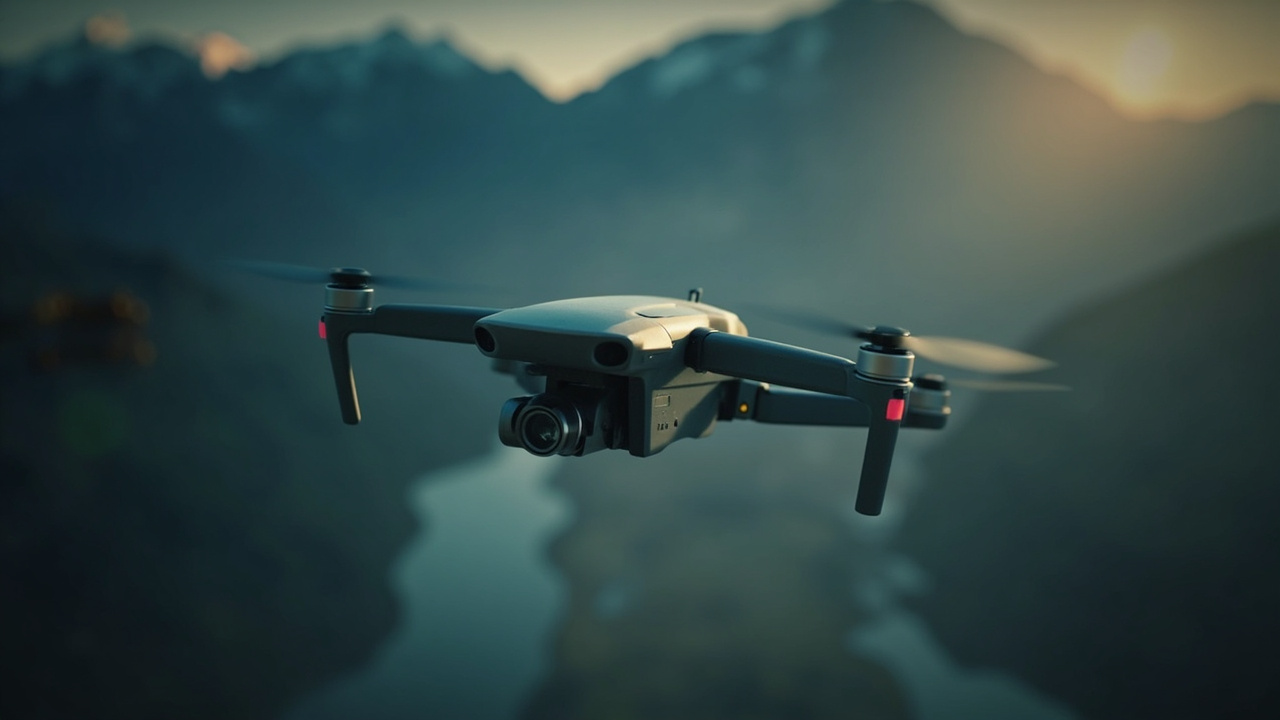
Your Mini 4 Pro says 249 grams on the box, and for four generations that number was the whole product strategy. Then the Mini 5 Pro shipped at 252 grams on a calibrated scale while the spec sheet said 249.9, and the question stopped being academic. Here is what actually governs a sub-250g aircraft in the United States as of September 2026: the threshold has not moved, the hardware has moved across it, and the exemption you rely on at home does not follow you abroad. The FAA recreational-flyer requirements were last revised on 18 March 2026 and still read 250 grams, 0.55 pounds, no tolerance. What changed in the 2025-2026 window happened everywhere except the rule itself.
This is a compliance walkthrough for pilots who already hold a Part 107 certificate or fly under the recreational exception and want to know exactly where the line sits, what crosses it, and what the pending rulemaking would do to it.
The 250-gram line did not move in 2025 or 2026
The controlling regulation is 14 CFR Part 48, Registration and Marking Requirements for Small Unmanned Aircraft. It opened for enrollment on 21 December 2015 and covers unmanned aircraft from 250 grams to 55 pounds all-up weight. No amendment in 2025 or 2026 changed the weight figure. The FAA registration page states the same threshold: all drones must be registered except those weighing 0.55 pounds or less and flown exclusively under the Exception for Limited Recreational Operations.
The mechanics have not changed either. Registration costs five dollars and runs three years. Recreational registrants get a single number that covers every aircraft they own. Part 107 registrants pay per aircraft and get a distinct number for each. Minimum age is 13. Everything flows through the DroneZone portal.
Worth remembering why the threshold is written the way it is. Part 48 was vacated as applied to recreational operators by the D.C. Circuit in Taylor v. Huerta on 19 May 2017, on the grounds that the FAA lacked statutory authority to require hobbyist registration. Congress restored it seven months later through Section 1092(d) of the FY2018 National Defense Authorization Act. The 250-gram carve-out survived that round trip intact, and it has been politically stable ever since. That stability is the reason the current disruption comes from hardware and from foreign regulators rather than from the FAA.
What the threshold actually measures: takeoff weight, not airframe weight
This is where most pilots get it wrong, and it is the single most consequential detail in this article. The 250-gram figure is a total takeoff weight. Battery, propellers, and every attached payload count toward it. The number printed on the manufacturer’s spec sheet is the ready-to-fly configuration the manufacturer chose to publish, not a permanent property of the airframe.
Practical consequences that catch people out:
- A 243-gram airframe with an aftermarket high-capacity battery can clear 250 grams and becomes a registerable aircraft.
- A screw-on ND filter set adds a few grams. On a drone published at 249 grams, a few grams is the entire margin. Our guide to ND filters worth buying covers the optical side; the weight side is on you.
- Prop guards, landing-gear extensions, and strobe lights all count.
- The DJI Mini 5 Pro’s Intelligent Flight Battery Plus is the clearest published example. DJI’s own specification page states that fitting the Plus battery pushes the aircraft past the C0 threshold, at which point it can no longer be operated as a C0 aircraft in Europe.
The compliance burden sits with the pilot, not the manufacturer. Transport Canada has stated this explicitly: operators are responsible for verifying their aircraft’s weight and must register any unit at or above the threshold. The FAA’s position is functionally identical. A marketing claim is not a defence.
The DJI Mini 5 Pro problem: 249.9g on the box, 252-253g on the scale
DJI launched the Mini 5 Pro on 17 September 2025 with a published takeoff weight of 249.9 grams. The specification page carries a disclaimer: actual weight is approximately 249.9 grams plus or minus 4 grams, varying with batch materials. Independent weighing found production units landing consistently at 252 to 253 grams.
Reporting on the pre-production decisions points to two late changes that added roughly four grams in total: a redesigned quick-release propeller system replacing the previous screw-on design, and an upgraded speaker. Neither change is unreasonable on its own. Together they consumed a margin that had been the defining feature of the product line through the Mavic Mini, Mini SE, Mini 2, Mini 3 Pro, Mini 4K, and Mini 4 Pro.
DJI’s marketing language shifted accordingly. The company now describes the aircraft as near-250g rather than sub-250g, packaging omits the figure, and units ship with both C0 and C1 certification documents. That last detail is the tell: shipping two class certificates is what you do when you expect the classification to be contested.
For a US pilot the practical answer is unambiguous. If your unit weighs 250 grams or more on a calibrated scale, it requires registration regardless of what the box says. Five dollars, three years, one number covering your whole recreational fleet. The cost of compliance is trivially small next to the cost of an enforcement action. If you are weighing an upgrade decision on this line, our Mini 5 Pro versus Mini 3 comparison covers the rest of the tradeoff.
Why EASA granted a tolerance and the FAA did not
Europe and the United States diverged on this question, and the reason is structural rather than political.
The EU operates a class-marking system. A C0 aircraft is certified against a maximum takeoff mass declared by the manufacturer during the certification process, and the underlying prEN 4709-001 standard permits a manufacturing tolerance of plus or minus three percent on that declared MTOM. Against a declared 249.9 grams, three percent allows up to roughly 257 grams while retaining the C0 label. EASA confirmed the Mini 5 Pro keeps its C0 classification on that basis, with the formalising document taking effect 30 April 2026.
The critical qualifier: that tolerance attaches to certification, not to the aircraft. It applies to manufacturer-certified airframes. It does not extend to home-built aircraft, and it does not exist outside the EU class-marking framework.
The United States has no equivalent structure. Part 48 sets a flat weight threshold with no certification layer to hang a tolerance on, so there is nothing for a manufacturer declaration to attach to. Regulators in the US, Canada, the UK, and Australia all confirmed they would not treat the Mini 5 Pro as a sub-250g aircraft. The UK CAA stated plainly that no weight tolerances exist in UK regulations. Australia’s CASA took a narrower position, requiring registration and accreditation for commercial operation but not for purely recreational flight.
The takeaway for practitioners: the EU tolerance is not a global grace period. It is an artefact of the class-marking system, and reading it as a worldwide four-gram cushion will get you registered in the wrong jurisdiction.
Part 107 erases the exemption entirely
The sub-250g exemption exists only inside the Exception for Limited Recreational Operations at 49 U.S.C. 44809. Step outside that exception and it vanishes completely.
Under Part 107, every aircraft must be registered regardless of weight. A 135-gram DJI Neo flown for any business purpose requires its own registration and its own number. Registration is per aircraft at five dollars each, so a ten-aircraft fleet costs fifty dollars and generates ten certificates.
Two details that matter operationally:
- Track selection is permanent per aircraft. Moving an aircraft between recreational and Part 107 registration requires full deregistration and re-enrollment. It is not a toggle.
- The commercial boundary is broader than most pilots assume. Monetised content counts. Sponsored footage counts. Indirect business benefit counts. If there is a payment or business motive anywhere in the chain, you are operating under Part 107 and the weight exemption is gone. Our breakdown of Part 107 business costs covers where else that boundary bites.
This is the most common compliance failure among pilots who buy a sub-250g aircraft specifically to avoid paperwork and then post monetised footage from it.
Registration and Remote ID are the same trigger
Since 16 September 2023, any aircraft that requires an FAA registration number must also broadcast Remote ID information, unless flown inside a FAA-Recognized Identification Area. The two obligations are coupled to the same trigger, which means crossing 250 grams does not add one requirement. It adds two.
Most current production aircraft ship with Standard Remote ID built in. For older airframes, an external broadcast module runs roughly forty to two hundred dollars. Recreational operators may assign one registration number across multiple aircraft sharing a single broadcast module; Part 107 operators register each device separately.
The FRIA escape hatch is narrowing. FRIAs are limited to community-based organisations and educational institutions, and the FAA is not approving new ones. Treat it as a diminishing option rather than a plan. Our coverage of Remote ID enforcement reality in 2026 has the enforcement-data picture, and the older Remote ID primer covers the mechanics.
One more coupling worth noting: registration is not the only paperwork attached to recreational flight. TRUST is required for every recreational flyer regardless of aircraft weight. A 135-gram aircraft needs no registration and still needs a TRUST completion certificate carried in flight.
The exemption does not travel: UK 100g, Canada, Australia
This is the change that actually landed in the 2025-2026 window, and it landed outside the United States.
The UK CAA dropped its registration threshold from 250 grams to 100 grams effective 1 January 2026. A DJI Mini 4K that needs nothing in the US requires UK registration. So does a 151-gram Neo 2. The only aircraft still clearing the UK line are sub-100-gram machines.
Transport Canada applies a 250-gram to 25-kilogram registration band with no recreational carve-out at all. The weight-based hobbyist exemption that exists in US law has no Canadian equivalent. Canadian registration costs ten dollars CAD per aircraft, up from five as of 1 April 2025, and does not expire on a renewal cycle.
Australia’s CASA requires registration and accreditation for commercial or work-related operation, but not for purely recreational flight, which makes it the most permissive of the four on this specific question.
The operational rule: your US registration status tells you nothing about your obligations abroad, and the trend line across jurisdictions is downward on thresholds, not upward. If you fly internationally, check the threshold before you pack, not after you land. The same principle applies to the certification framework generally, as our Part 107 versus CAAC versus EASA comparison lays out.
What Part 108 and H.R.6460 would and would not change
Two pending items get cited as imminent changes to the registration picture. Neither one moves the weight threshold.
Part 108. The BVLOS NPRM published 7 August 2025 under Docket FAA-2025-1908 does include proposed conforming amendments to Part 48 registration and Part 89 Remote ID. The comment period closed 6 October 2025 after roughly 3,100 substantive comments, with a narrow reopening on electronic conspicuity through 11 February 2026. Executive Order 14307 set a 240-day clock implying a final rule around 1 February 2026; that date passed without publication. The final rule arrived at OIRA on 10 July 2026 and remains pending. Part 108 is a BVLOS operating framework, not a rewrite of the recreational weight threshold, and until it publishes nothing in it is operative. Our Part 108 and waivers explainer covers what it does change.
H.R.6460, the Recreational Drone Empowerment Act. Introduced 4 December 2025, reported by House Transportation and Infrastructure on 16 March 2026, passed the House by voice vote on 24 March 2026, and referred to Senate Commerce, Science, and Transportation on 25 March 2026. The bill amends 49 U.S.C. 44809(c)(2)(C) to extend the uncontrolled-airspace provision to Class E airspace above Class G and to Class E surface-area extensions. It is an airspace-access bill. It does not touch the weight threshold, registration, or Remote ID. As of September 2026 it remains in Senate committee.
If you have been waiting for a rule change before registering a borderline aircraft, there is nothing in the pipeline to wait for.
A practical compliance procedure for a borderline aircraft
For any aircraft published between 240 and 260 grams, run this once and record the result:
- Weigh the actual flight configuration. Use a calibrated scale with 0.1-gram resolution. Weigh the aircraft exactly as it leaves the ground: installed battery, installed propellers, any filter, any guard, any accessory. Not the airframe. Not the box figure.
- Weigh each configuration separately. If you swap between a standard and an extended battery, or fly with and without filters, those are distinct takeoff weights and one of them may cross the line while the other does not.
- Record the reading with a date. A photograph of the scale with the aircraft on it takes ten seconds and is the only contemporaneous evidence you will have.
- If any configuration reads 250.0 grams or more, register. There is no rounding convention, no tolerance, and no manufacturer declaration that overrides the reading in the US.
- Confirm Remote ID capability at the same time. If registration is triggered, so is Remote ID. Verify Standard Remote ID is present, or source a broadcast module, and link the Remote ID serial to the registration record in DroneZone.
- Mark the airframe externally. The registration number must be legible without tools or disassembly. Internal-only placement has been prohibited since the 2019 amendment to Part 48. Permanent marker, adhesive label, or engraving all satisfy it.
- Re-run after any hardware change. A new battery, a new propeller set, or a new accessory resets the calculation.
If you are flying commercially, skip the entire procedure. Register every aircraft regardless of weight and move on. Adding it to your standing maintenance schedule as a post-modification check is the cheapest way to keep it current.
Frequently asked questions
Do I need to register a drone that weighs exactly 250 grams?
Yes. The exemption applies to aircraft weighing 0.55 pounds or less, and 250 grams is the threshold at which registration begins. An aircraft reading exactly 250.0 grams at takeoff weight requires registration. The exemption covers aircraft below the line, not at it.
Does the DJI Mini 5 Pro need FAA registration?
In practice, yes for nearly every unit. DJI publishes 249.9 grams with a plus or minus 4-gram batch tolerance, and independent weighing puts production units at 252 to 253 grams. US regulators confirmed they will not apply a manufacturing tolerance. Weigh your specific unit; if it reads 250 grams or more, register it. Under Part 107 it requires registration regardless.
Does adding ND filters or prop guards to a sub-250g drone trigger registration?
If the addition pushes total takeoff weight to 250 grams or more, yes. The threshold measures the aircraft as it leaves the ground, including battery, propellers, and every attached accessory. On an aircraft published at 249 grams, almost any accessory will cross the line.
Do sub-250g drones need Remote ID in the US?
Not when flown recreationally below the threshold, because Remote ID is triggered by the registration requirement rather than independently. A genuinely sub-250g aircraft flown under the recreational exception needs neither. Flown under Part 107, the same aircraft requires both registration and Remote ID regardless of weight.
Does my US recreational registration cover me in the UK or Canada?
No. Registration is jurisdiction-specific and the thresholds differ. The UK dropped to 100 grams on 1 January 2026. Canada requires registration from 250 grams with no recreational exemption. Australia requires it for commercial operation only. Check the destination’s current threshold before travelling.
Bottom line
The 250-gram threshold in 14 CFR Part 48 is the same rule it has been since December 2015, and nothing in the 2025-2026 legislative or rulemaking pipeline changes it. What changed is that the hardware finally crossed the line, the EU built a tolerance the US has no structure to replicate, and the UK moved its own threshold down to 100 grams. All three shift the compliance burden onto the pilot’s scale rather than the manufacturer’s spec sheet.
The concrete next step is five minutes long: weigh every aircraft in your fleet in its actual flight configuration, photograph the readings, and register anything at or above 250.0 grams. Five dollars covers your entire recreational fleet for three years. If you fly commercially, register everything regardless. Then check where you can legally fly before the next flight.
{ “@context”: “https://schema.org”, “@type”: “Article”, “headline”: “Sub-250g Drone Registration Rules in 2026: What Still Applies”, “description”: “Sub-250g drone registration rules in 2026: the FAA threshold has not moved, but the Mini 5 Pro weighs 252g and the UK dropped to 100g. Read the compliance walkthrough.”, “image”: [ “https://dronesera.com/wp-content/uploads/2026/09/sub-250g-drone-registration-rules-2026-hero.png” ], “author”: { “@type”: “Organization”, “name”: “Dronesera”, “url”: “https://dronesera.com” }, “publisher”: { “@type”: “Organization”, “name”: “Dronesera”, “url”: “https://dronesera.com”, “logo”: { “@type”: “ImageObject”, “url”: “https://dronesera.com/wp-content/uploads/2026/09/sub-250g-drone-registration-rules-2026-hero.png” } }, “datePublished”: “2026-09-10”, “dateModified”: “2026-09-10”, “mainEntityOfPage”: { “@type”: “WebPage”, “@id”: “https://dronesera.com/sub-250g-drone-registration-rules-2026/” }, “articleSection”: “Drone Regulations”, “keywords”: “sub-250g drone registration rules 2026, FAA drone registration threshold, 250 gram drone rule, DJI Mini 5 Pro weight, Part 48 registration” } { “@context”: “https://schema.org”, “@type”: “FAQPage”, “mainEntity”: [ { “@type”: “Question”, “name”: “Do I need to register a drone that weighs exactly 250 grams?”, “acceptedAnswer”: { “@type”: “Answer”, “text”: “Yes. The exemption applies to aircraft weighing 0.55 pounds or less, and 250 grams is the threshold at which registration begins. An aircraft reading exactly 250.0 grams at takeoff weight requires registration. The exemption covers aircraft below the line, not at it.” } }, { “@type”: “Question”, “name”: “Does the DJI Mini 5 Pro need FAA registration?”, “acceptedAnswer”: { “@type”: “Answer”, “text”: “In practice, yes for nearly every unit. DJI publishes 249.9 grams with a plus or minus 4-gram batch tolerance, and independent weighing puts production units at 252 to 253 grams. US regulators confirmed they will not apply a manufacturing tolerance. Weigh your specific unit; if it reads 250 grams or more, register it. Under Part 107 it requires registration regardless.” } }, { “@type”: “Question”, “name”: “Does adding ND filters or prop guards to a sub-250g drone trigger registration?”, “acceptedAnswer”: { “@type”: “Answer”, “text”: “If the addition pushes total takeoff weight to 250 grams or more, yes. The threshold measures the aircraft as it leaves the ground, including battery, propellers, and every attached accessory. On an aircraft published at 249 grams, almost any accessory will cross the line.” } }, { “@type”: “Question”, “name”: “Do sub-250g drones need Remote ID in the US?”, “acceptedAnswer”: { “@type”: “Answer”, “text”: “Not when flown recreationally below the threshold, because Remote ID is triggered by the registration requirement rather than independently. A genuinely sub-250g aircraft flown under the recreational exception needs neither. Flown under Part 107, the same aircraft requires both registration and Remote ID regardless of weight.” } }, { “@type”: “Question”, “name”: “Does my US recreational registration cover me in the UK or Canada?”, “acceptedAnswer”: { “@type”: “Answer”, “text”: “No. Registration is jurisdiction-specific and the thresholds differ. The UK dropped to 100 grams on 1 January 2026. Canada requires registration from 250 grams with no recreational exemption. Australia requires it for commercial operation only. Check the destination’s current threshold before travelling.” } } ] } { “@context”: “https://schema.org”, “@type”: “WebPage”, “@id”: “https://dronesera.com/sub-250g-drone-registration-rules-2026/”, “url”: “https://dronesera.com/sub-250g-drone-registration-rules-2026/”, “name”: “Sub-250g Drone Registration Rules in 2026: What Still Applies”, “description”: “Sub-250g drone registration rules in 2026: the FAA threshold has not moved, but the Mini 5 Pro weighs 252g and the UK dropped to 100g. Read the compliance walkthrough.”, “speakable”: { “@type”: “SpeakableSpecification”, “cssSelector”: [ “h1”, “.entry-content > p:first-of-type” ] }, “isPartOf”: { “@type”: “WebSite”, “name”: “Dronesera”, “url”: “https://dronesera.com” } } { “@context”: “https://schema.org”, “@type”: “ClaimReview”, “url”: “https://dronesera.com/sub-250g-drone-registration-rules-2026/”, “datePublished”: “2026-09-10”, “claimReviewed”: “US FAA drone registration rules changed in 2025 to alter the sub-250g exemption.”, “author”: { “@type”: “Organization”, “name”: “Dronesera”, “url”: “https://dronesera.com” }, “reviewRating”: { “@type”: “Rating”, “ratingValue”: 1, “bestRating”: 5, “worstRating”: 1, “alternateName”: “False” }, “itemReviewed”: { “@type”: “Claim”, “author”: { “@type”: “Organization”, “name”: “Industry commentary” }, “datePublished”: “2025-09-17” }, “reviewBody”: “The 250-gram registration threshold in 14 CFR Part 48 has been in force since 21 December 2015 and was not amended in 2025 or 2026. The FAA recreational-flyer requirements, last revised 18 March 2026, state the same 250-gram threshold. What changed is hardware weight (DJI Mini 5 Pro production units at 252-253g against a 249.9g published spec), the EASA prEN 4709-001 plus-or-minus 3 percent MTOM certification tolerance effective 30 April 2026, and the UK CAA threshold drop from 250g to 100g effective 1 January 2026. No US rule change occurred.” }